


Rev. Dr. Harold Conrad
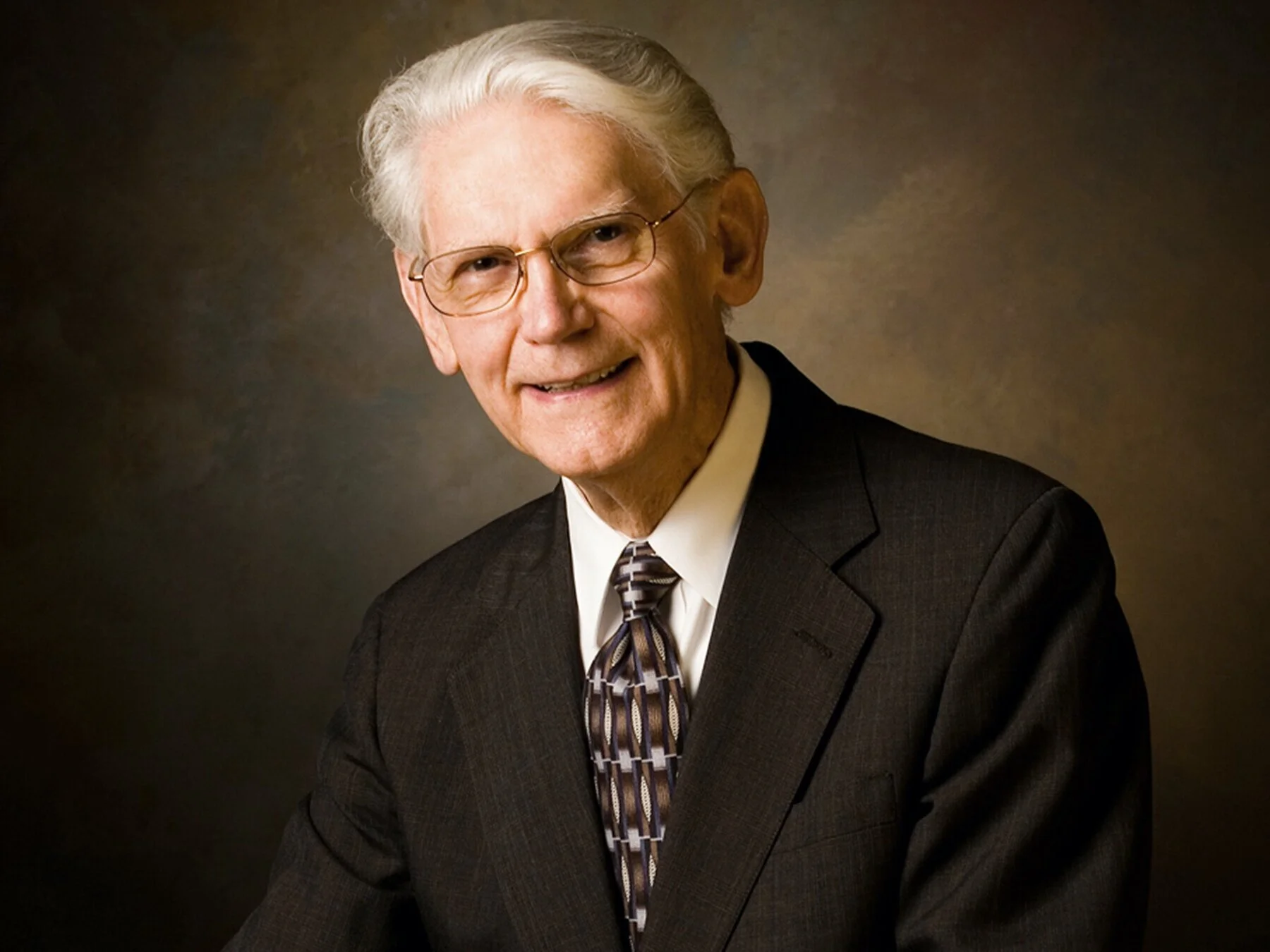
All I have I owe to the church…
Harold Conrad was born in Cleveland, Ohio, on December 18, 1928, the fifth of seven children that came to bless the home of Olga Heise and August Conrad, immigrants from Prussia. Harold spent the first 19 years of his life in Cleveland, Ohio, and the suburb called Parma. He attended the German Church of God until age 13 when the family moved across town and began attending the English-speaking congregation pastored by, first, John Kane, and later, Cecil Brown.
During an evangelistic meeting at the German church, Harold became a Christian. At age 14 he felt called to the Christian ministry and immediately began making plans to fulfill this calling. He took the proper courses in high school, worked as church secretary for Pastor Brown, and enrolled in Anderson College.
After graduating from college in 1952, he entered his first pastorate as associate in Akron, Indiana. Eighteen months later, he became senior pastor of this growing congregation. One year after his service began at the Akron church, the Board of Trustees enrolled him in the Church of God Pension Plan. Deposits were small at first, but became larger with every salary increase. From that day in 1953 until Harold retired in January 1994, deposits were made for him by the three churches he pastored and by the Pension Board when he became its Executive Secretary-Treasurer.
In 1964, while pastor of the Church of God in Winchester, Kentucky, he was elected to the Board of Trustees for the Pensions Board by the General Assembly. In 1972, he was asked to become the Board’s vice president. At this time, Glenn Falls was president and E. E. Wolfram served as Executive Secretary-Treasurer (Chief Executive Officer). He held this position for two years when he was asked to succeed Dr. Wolfram who had reached retirement age. Harold served as Chief Executive Officer until his own retirement. Harold served the Board for ten years as a member of the Board, 19½ years as Chief Executive Officer, and then 5½ years as part-time consultant and director of marketing for a total of 35 years.
Before he became Executive Secretary-Treasurer, Harold pastored the Glendale Church of God (now Church at the Crossing) in Indianapolis, Indiana. While there he completed courses at Christian Theological Seminary to earn his Master of Divinity degree, a degree program he began at the Anderson School of theology in 1952. During his years of service with the Board of Pensions, he did graduate work at Ball State University in the field of administration and attended numerous workshops and seminars on finance, investments, economics and retirement.
The economy was in recession when Harold became the Board’s Chief Executive Officer in 1974. Many were wondering if a depression or even a total collapse of the market was in store. The next few years, however, saw a turnaround. His years of leadership saw significant change and increasing service to the Church. With the assistance of dedicated and astute officers and trustees, Harold led the Board of Pensions from self-management of funds to the use of competent money managers with excellent track records of good returns from investments.
Under his leadership, Pension Plan membership grew. A tireless worker, Dr. Conrad served on many state and national church boards and committees; treasurer of the Indiana Evangelistic Board, chair of the Indiana State Assembly, vice chair of the Kentucky State Assembly, chair of the Division of World Service and chair of the World Hunger and Relief Committee. But one of the greatest honors bestowed on him was when he served as vice president and president of one of the oldest annual conferences in the United States – the Church Pensions Conference – which brings together the primary leaders and directors of the major church pension plans in the United States.
Harold lost his first wife, Anne, in 1956. At her death, he was left with three small children. Nearly five years later, he married Naomi (Sweeny), a missionary nurse and midwife in Kenya, East Africa.
Harold often said, “All I have I owe to the Church. The Church has been good to me – better than I deserve.”